Understanding the 93053878704 Supply Identifier
This guide explains what the identifier “93053878704” typically represents in procurement and supply workflows, and how businesses verify it with responsible sourcing practices. Objectively, such numbers are commonly used for internal cataloging, supplier reference tracking, and shipment reconciliation, but meaning varies by organization and region. You’ll also find decision criteria and requirements to confirm compatibility.

Why “93053878704” Matters in Procurement Workflows
The identifier 93053878704 is very often encountered as a reference number used to connect purchasing, inventory, and delivery records. In practice, it can function like a supplier catalog reference, an ERP item key, or a logistics reconciliation code, helping teams confirm they are working with the correct SKU, contract line, or shipment batch. However, its exact meaning is not universal—verification depends on your organization’s system and the supplier’s documentation.
When teams treat an identifier as “just a number,” errors can follow: mis-matched product lines, wrong quantities, or delays in customs and receiving. A more durable approach is to treat 93053878704 as a data anchor that must be validated against purchase orders, supplier invoices, and shipment documents—then mapped to your internal product master.
To make this concrete, imagine a procurement analyst handling a high-volume month where dozens (or hundreds) of lines move through the warehouse and finance systems. In that environment, the number 93053878704 may appear in multiple systems: one system might store it under a “supplier part number” field, another might store it as a “vendor item reference,” while the warehouse might capture it from a label scan. If those fields aren’t reconciled properly, a single line can drift—leading to stock inaccuracies, payment delays, or audit queries.
Therefore, the “why it matters” is not about the number itself. The number matters because it represents a link in a chain. Procurement workflows are essentially chains of identifiers: PO numbers connect to PO lines; PO lines connect to receiving documents; receiving documents connect to GRN/put-away lines; GRN lines connect to inventory quantities; and invoice lines connect back to PO lines for accruals and payment. When any link is weak, the whole chain becomes less reliable.
What the Keyword Fragments Usually Indicate (And What They Don’t)
In many procurement contexts, keyword fragments provided alongside an identifier can indicate related commercial metadata such as supplier classification, category descriptors, or a transaction context. That said, you should not assume that any standalone numeric reference (including 93053878704) automatically implies a specific product type, quality level, or pricing tier. The safest objective stance is: the identifier is a linkable reference, not a guarantee of content by itself.
Even experienced teams can fall into a subtle trap: treating an identifier as self-describing. Numeric codes are frequently meaningful only inside a particular system or within a particular vendor’s naming convention. The same digits can, in theory, be used by different vendors for different internal reasons—or be reused across categories. They can also be reformatted when exported (for instance, leading zeros being dropped in spreadsheet imports). For those reasons, the correct interpretation typically requires looking at where the identifier is stored, how it is referenced, and how it is verified against line attributes.
If your workflow includes additional codes (for example, internal batch tags or document numbers), the correct interpretation usually comes from how the supplier and your own system label fields in:
- Purchase Orders (PO line references)
- Supplier Invoices (invoice line references)
- Advance Shipping Notices (ASN)
- Bill of Lading / airway bill references
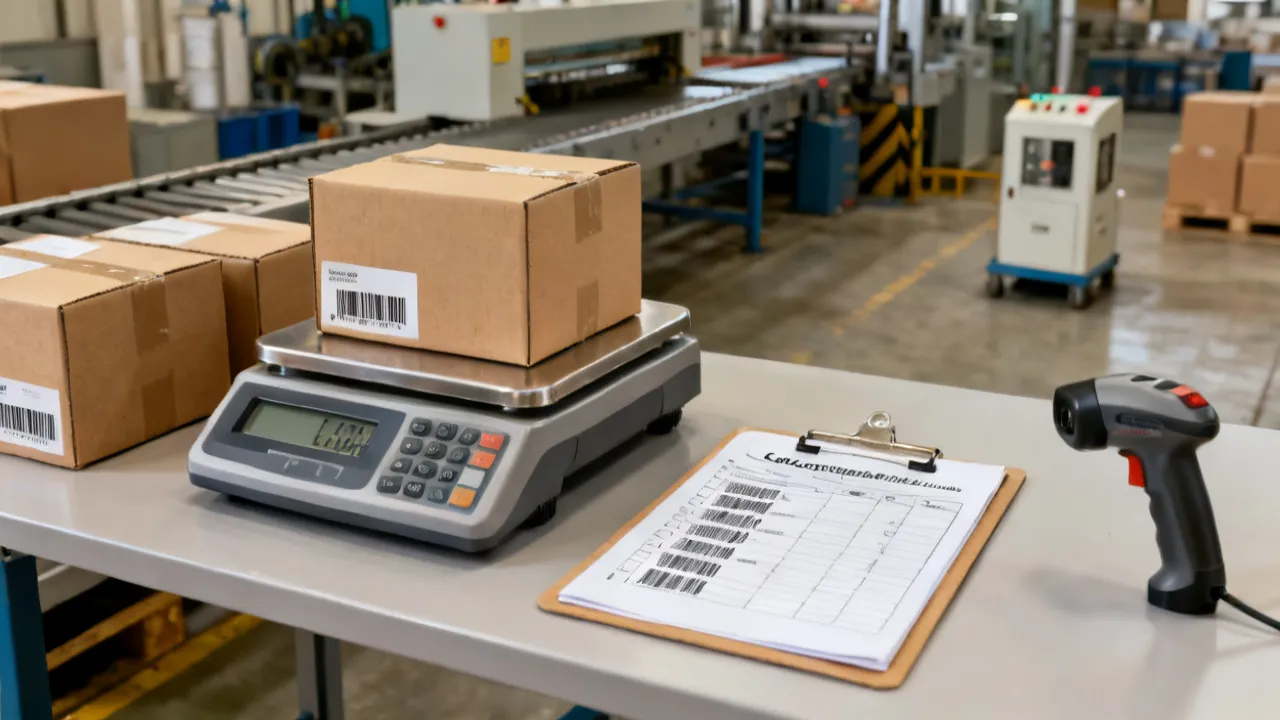
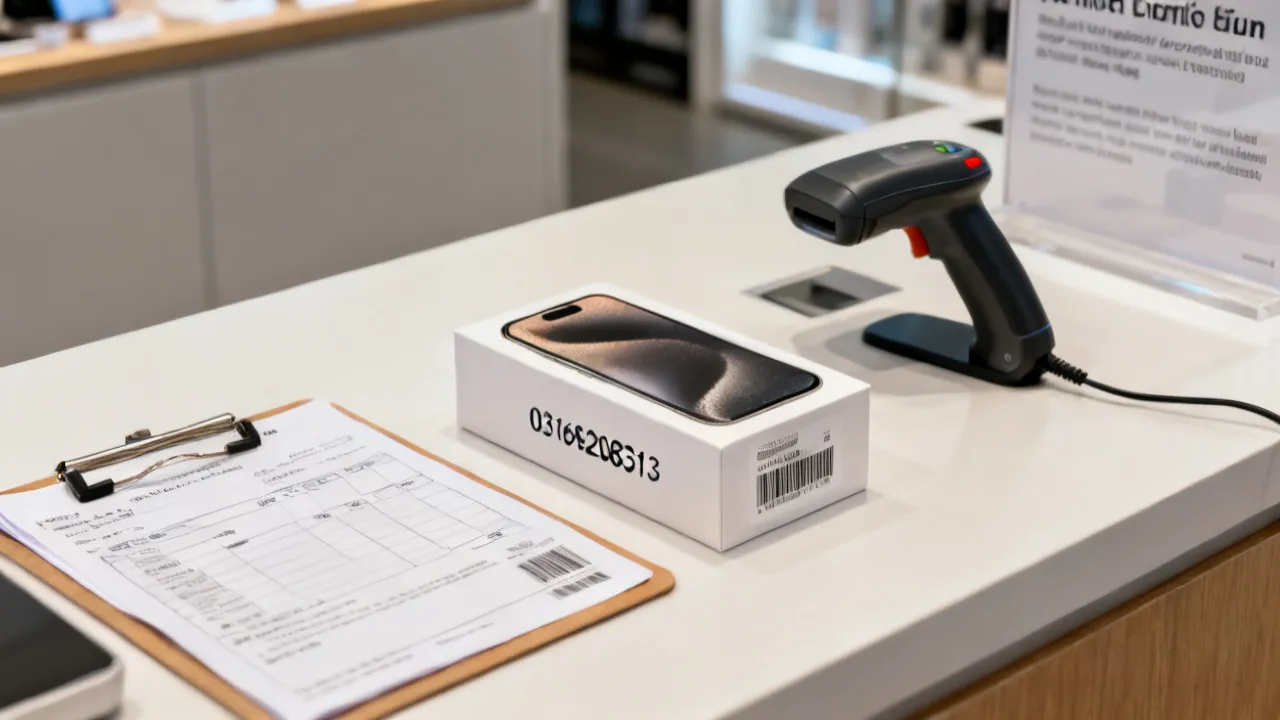
- Warehouse receiving scans (barcode or internal label mapping)
It can help to think of 93053878704 as a “join key” rather than as “the truth.” A join key can be incredibly powerful (it enables system-to-system reconciliation) but it does not automatically define the attributes of the record it joins to. The attributes—quantity, UOM, description, pack size, quality grade, origin, batch/lot number—are what must be validated.
Critical First Step: Validate the Identifier Against Source Documents
From an industry-operations perspective, the very reliable way to understand 93053878704 is to locate it in primary documents and then trace where it appears in your end-to-end chain. This is the difference between “knowing” and “verifying.”
At minimum, check:
- Does 93053878704 appear on the PO line item description or SKU field?
- Does it appear on the supplier invoice line or item reference?
- Does it match the item code used at receiving (warehouse scans or GRN line)?
- Is it associated with the expected unit of measure (UOM), quantity, and pack size?
If any of those do not match, treat the mismatch as a data quality issue and resolve it before the goods are finalized as received. In regulated or high-risk categories, this also supports audit readiness.
To expand on “source documents,” consider the typical procurement document lifecycle:
- PO document set may include a header with supplier identity and incoterms, plus PO line details including quantity, UOM, delivery date, requested quality/grade, and item reference codes.
- Supplier confirmation (sometimes required contractually) may confirm or correct line references and provide lead time and packaging configuration.
- ASN often provides shipment-level details plus item-level line references (commonly matching PO references, sometimes not).
- Freight documents like bill of lading and airway bill capture shipment routing but may also include carton/box details or references that tie back to shipment batches.
- Receiving documents include GRN, goods receipt notes, weighbridge tickets (for bulk goods), inspection/quality reports, and scan logs.
- Invoice then ties back to the PO using line-level references for proper reconciliation and tax calculation.
In that lifecycle, 93053878704 should appear consistently in the relevant fields—or, if it appears differently, there should be a mapping policy that explains the variation.
For example, a supplier might place 93053878704 on the ASN under a field called “ItemCode,” while your PO stores it under “SupplierMaterialNo,” and your ERP uses “VendorItemReference.” Those field names differ, but the concept is aligned. That alignment is what you need to validate, not the literal field label.
Pricing and Commercial Context: How to Discuss Cost Without Guessing
Your prompt mentions “price information,” but no explicit currency or amount is included in the provided content. To remain accurate and objective, the professional approach is to discuss pricing mechanics rather than invent a number.
In supply and procurement operations, a reference like 93053878704 is often used to align the commercial terms that accompany the line item, such as:
- Agreed unit price or price tier
- Incoterms (e.g., shipping responsibility allocation)
- Tax treatment and invoicing structure
- Lead time and any surcharges (if applicable)
- Minimum order quantities (MOQ) or pack constraints
Practical guidance: compare the line price and tax/fees from the supplier invoice to the PO’s agreed commercial terms—using 93053878704 as the key to ensure you are comparing the same item line, not just the same product name.
In many organizations, invoice disputes happen not because the pricing is wrong in principle, but because the invoice line is attached to the wrong PO line. When that occurs, the invoice might still show a plausible product description, yet the unit price and tax calculation can diverge. A stable identifier workflow prevents this by making line-level reconciliation more deterministic.
To discuss cost responsibly, teams should also ensure that the following pricing-adjacent attributes align to the same 93053878704 record:
- UOM (unit of measure): whether the supplier prices “per case,” “per unit,” or “per kilogram” and how your ERP expects it.
- Pack configuration: if the supplier’s price assumes a specific pack size, receiving must reflect it.
- Discounts: rebates or schedule discounts may be applied at line or order level; ensure the reference connects to the correct tier.
- Currency and exchange rate details: even if the identifier matches, the invoice currency might differ from the PO currency, requiring correct exchange rate application rules.
In a typical reconciliation workflow, a procurement analyst might run a three-way comparison using 93053878704 as the key: (1) PO line commercial fields, (2) invoice line commercial fields, and (3) receiving line quantities (to verify that invoiced quantities do not exceed received quantities unless policy allows it). When these three are consistent, disputes decrease dramatically.
Supplier Details and Traceability: What “Good” Looks Like
When an identifier is part of a supplier’s catalog or shipment labeling system, traceability becomes essential. A strong supplier onboarding process makes these elements explicit:
- How identifiers are generated and where they appear
- What documentation is provided per shipment or batch
- How substitutions are handled if inventory changes
- Responsibility for labeling corrections
- Clear processes for receiving disputes
From an operational-excellence viewpoint, a supplier that documents the meaning of 93053878704 (or supplies a mapping to their SKU master) typically reduces cycle time and receiving errors. Conversely, ambiguity increases the probability of mismatch and rework.
To define “good,” procurement teams often look for measurable signs during onboarding and first-shipment phases:
- On-time and complete ASN submission with item-level references that match PO lines (including 93053878704 or a defined mapping).
- Consistent UOM declaration across PO confirmation, ASN, and invoice.
- Label accuracy at carton level (barcodes/scannable labels reflect the same identifier your warehouse expects).
- Clear substitution policy that triggers approval steps if the identifier changes or if equivalent items are substituted.
- Response time for correction requests (e.g., when a wrong label is identified before full receipt).
Traceability also includes “what happened if something goes wrong.” In a robust system, the supplier onboarding doc and internal SOP provide a structured path: who contacts whom, what evidence is needed, and what corrective action must be taken. For example, if 93053878704 appears on the invoice but not on the receiving record, the workflow should define whether you hold the goods, correct the mapping in ERP, request supplier credit, or open an exception case.
Location Localization: Interpreting “nearby” Instead of Assuming a Specific City
Your instruction requests that any place token in keywords be replaced with “nearby.” Since no specific city/country was provided in the prompt content, this article treats the context as regionally generic. In real procurement environments—whether near major industrial corridors or closer to retail logistics hubs—process steps remain similar, but practical details can differ (customs procedures, carrier cut-off times, warehouse documentation standards, and local labeling expectations).
Where regional differences matter, you should rely on your local compliance team or your carrier’s guidance rather than assuming that the same documentation will always be interpreted identically in every jurisdiction.
To make “nearby” useful instead of vague, consider the procurement operations differences that can occur between regions even when the supplier is “nearby” in geographic terms:
- Customs and import documentation requirements may vary by jurisdiction and commodity type, affecting which references must appear on shipping documents.
- Carrier operational cut-offs differ by local schedules; this impacts whether ASNs and receiving windows align with your internal planning.
- Warehouse receiving standards can differ: some warehouses may require pallet-level scans, others only carton-level scans, and that changes how 93053878704 is captured.
- Tax handling may differ in how invoice fields are required for VAT/GST submission, which again ties back to line-level identifiers.
In short, “nearby” affects timing and local operational details, but the fundamental logic—validating line references and reconciling across documents—remains consistent.
Industry Context: Why Identifiers Become Bottlenecks or Enablers
Supply chains rely on consistent identifiers to move smoothly from purchasing to warehouse receiving to accounting. When identifiers like 93053878704 are well-governed, they enable:
- Faster receiving verification
- Lower error rates in picking and packing
- Cleaner ERP reconciliations
- Better audit trails and dispute resolution
When governance is weak, teams experience:
- Wrong-line billing or invoice disputes
- Stock inconsistencies between systems
- Delays due to manual reconciliation
- Increased returns or rework
In other words, identifiers are not merely administrative—they shape cost, speed, and compliance outcomes.
It can be useful to examine the bottleneck mechanics. Imagine a warehouse team scanning cartons at receiving. If the scan system expects a certain identifier format (e.g., leading zeros preserved, or alphanumeric patterns), but the supplier provides the identifier in a different format, scans might not match existing records. The warehouse may then default to manual entry, which increases error probability and slows down receiving.
Similarly, accounting teams often rely on automated three-way matches: PO vs receipt vs invoice. If 93053878704 appears in some documents but not in others, the automated match can fail, pushing the case into manual review. Manual review is time-consuming, and it frequently creates backlogs during peak periods.
Therefore, treating 93053878704 as a “data anchor” is not just a best practice—it’s a structural approach to prevent operational friction.
Inverted Pyramid: The Very Critical Requirements Up Front
To use 93053878704 correctly in procurement, prioritize these requirements:
- Documented meaning: confirm what the identifier maps to (SKU/item/contract line) via PO or supplier master data.
- Cross-document consistency: verify presence across PO, invoice, ASN/shipping docs, and receiving records.
- Unit of measure alignment: ensure UOM, pack size, and quantities match expected values.
- Process for exceptions: define what to do when a mismatch occurs (stop-ship/hold-and-check workflow).
- Audit readiness: keep traceable records of how the identifier was validated.
Notice the emphasis: these requirements are about operational reliability, not assumptions. They are designed to be actionable for teams who must handle exceptions, deadlines, and compliance requirements.
For high-performing organizations, these requirements are operationalized into workflows and controls. For example, a receiving system might enforce “identifier must match PO line” for certain categories. For lower-risk categories, the control might be looser but still validated via post-receipt reconciliation. The level of strictness depends on risk, contract terms, and the cost of errors.
Comparison Table: Verification Approaches and When to Use Each
| Verification Approach | What It Confirms | Top Use Case | Key Requirement |
|---|---|---|---|
| Document Trace Check | Whether 93053878704 matches across PO, invoice, and receiving records | Standard procurement cycles | Access to primary documents and line-level fields |
| Supplier Master Mapping | What 93053878704 corresponds to in the supplier’s catalog | Onboarding new suppliers or integrating new product lines | Supplier-provided item master or mapping file |
| ERP Field Alignment Review | Whether your internal item key and UOM align with the external identifier | ERP migrations and system updates | Your ERP master data governance and change logs |
| Label/Scan Reconciliation at Receiving | Whether physical labels correspond to the identifier and quantity | Warehouse receiving and high-volume operations | Receiving scan logs and GRN/put-away rules |
To select the right approach, procurement leaders often consider the “failure mode.” If the concern is that the supplier’s invoice line references are inconsistent, then document trace checks are crucial. If the concern is that the warehouse cannot match scanned labels to ERP items, label/scan reconciliation becomes central. If the concern is a system integration failure (e.g., during ERP migration), ERP field alignment review is the priority.
In practice, many teams combine these methods. A strong control environment uses layered verification: a lightweight automated check for most transactions, plus targeted deeper checks when mismatches appear.
Source Basis (Objective): What Industry Practices Typically Align With
This article’s verification logic is consistent with widely used supply-chain and procurement control practices (document traceability, reconciliation, and master-data alignment). For broader grounding in auditability and information controls, organizations often reference standards and guidance from entities such as ISO and established compliance frameworks. For example, the ISO 9001 quality management principles emphasize evidence-based processes and document control, and audit-ready records are a common requirement in quality systems.
Note: Specific claims about how 93053878704 is used by a particular supplier cannot be verified from the provided prompt alone. Therefore, this guide focuses on robust, general-purpose methods that reduce operational risk.
It’s worth emphasizing how these general practices translate into real controls. Many organizations implement:
- Three-way match (PO vs receipt vs invoice) with exceptions workflows.
- Master data governance with approval steps for item mappings and UOM conversions.
- Supplier onboarding checks with test orders to confirm identifier and label alignment.
- Audit trails capturing who approved mappings, what version was used, and what documents were validated.
Even though the identifier 93053878704 might not have a standardized external meaning across all organizations, the operational logic of validation is universal: identifiers must link correctly to the right line attributes.
Step-by-Step Guide: How to Confirm What “93053878704” Represents
Below is a practical, step-by-step approach that operations teams can apply. These steps are designed to be vendor-agnostic and suitable for processes operating “nearby” within your region’s standard logistics and compliance expectations.
-
Collect the primary references: locate 93053878704 in the PO, invoice, and shipping/receiving documents related to the transaction.
-
Identify the field type: determine whether it is stored under an “item reference,” “SKU,” “contract line,” “batch,” or “shipment label” field in each document.
-
Cross-check line-level attributes: compare quantity, UOM, pack size, and product description across PO vs invoice vs receiving record for the same 93053878704 line.
-
Validate against supplier master data: request or retrieve the supplier’s item master mapping for the reference, especially if the identifier is used in multiple categories.
-
Confirm ERP mapping: ensure your ERP item master links the external identifier to your internal item code and that the UOM conversions are correct.
-
Define exception handling: if the identifier appears but line attributes differ, place the shipment on hold and escalate according to your receiving dispute procedure.
-
Record verification evidence: retain a short audit trail showing the matching documents and attribute checks performed for 93053878704.
To make this even more actionable, consider additional practical details that teams often overlook:
- Check formatting: confirm whether 93053878704 is stored as text or numeric in spreadsheets. If it’s stored numerically, leading zeros could be lost. Even without leading zeros, numeric-to-text conversions can cause truncation or scientific notation issues in Excel-like systems.
- Confirm revision/effective dates: item references sometimes change due to engineering revisions. Your PO might be tied to revision A, while the supplier might have updated to revision B.
- Validate packaging hierarchy: if receiving uses carton labels, ensure 93053878704 is printed at carton level (not only pallet level) and that quantity per carton matches.
- Compare lot/batch fields if relevant: for regulated goods, the identifier might represent a base SKU while the lot/batch is a different field. Your control must address both.
Another operational improvement is to establish a “decision tree” for identifiers. For instance:
- If 93053878704 appears in all three documents (PO, invoice, receiving) and quantity/UOM match, proceed with normal matching.
- If it appears in PO and invoice but not receiving, treat as a receiving issue (possible label mismatch or scanning error).
- If it appears in PO and receiving but not invoice, treat as an invoice reference issue (supplier invoice formatting or line-level mapping error).
- If it appears only in receiving, treat as an item mapping issue (warehouse system scanned something not tied to PO line) and investigate.
These structured responses reduce guesswork and speed up resolution.
Conditions and Requirements for a Reliable Interpretation
To interpret an identifier like 93053878704 reliably, these conditions should be met:
- Single source of truth: designate which document type is authoritative when discrepancies occur (often PO or approved supplier confirmation, depending on policy).
- Version control: ensure that item descriptions and UOM mappings reflect the correct revision or effective date.
- Consistent formatting: confirm whether the supplier uses leading zeros, hyphens, or hidden formatting (e.g., stored as text in spreadsheets).
- Controlled substitutions: if substitutions are allowed, they must reference an approved equivalent and be traceable to documentation.
- Warehouse process integration: receiving scans should reference the same identifier that procurement uses (or a validated mapping must exist).
In a mature procurement control environment, these conditions are enforced through system checks and SOPs.
Consider a few scenarios where these conditions matter:
- Warehouse receives early: the goods arrive before the PO line is fully loaded into the ERP. The warehouse may scan and temporarily stage items under a generic reference. Later, finance tries to reconcile invoice lines to PO lines, but the receiving record used a different identifier. The fix is not “guessing”—it’s ensuring that the receiving process uses the correct PO-line reference mapping.
- Supplier changed their catalog: the supplier may update internal identifiers and start sending new codes. If onboarding mapping isn’t updated, then 93053878704 might stop matching automatically.
- UOM conversion confusion: the PO is “each,” but the supplier invoice is “case.” If 93053878704 matches but UOM differs, you can end up paying for 1 case when you intended 1 each—or vice versa. That is why UOM alignment is a core requirement.
Therefore, interpret 93053878704 through the lens of controlled conditions, not through isolated observation.
Industry Expert View: Common Failure Modes to Avoid
In consulting engagements, the same patterns appear repeatedly:
1) Treating numeric identifiers as self-explanatory
A number rarely explains itself. Without mapping documentation, 93053878704 can only be considered a reference key, not proof of product identity or compliance status.
Teams sometimes believe that because the identifier is present, the product must be correct. But presence only proves that the systems are referencing something; it does not prove that the referenced object is the correct item revision, quality grade, or packaging configuration. In procurement, “correctness” is multidimensional.
2) Comparing names instead of line fields
Teams often compare product names (“what it looks like”) rather than line-level attributes (“what the system agreed to purchase”). Use the identifier 93053878704 to synchronize the comparison, then verify attribute details.
A practical reason names fail: suppliers may include marketing descriptions that differ from your engineering BOM names. Warehouse staff may see a shorthand label that matches the human understanding but not the ERP-coded identity. Therefore, always tie comparisons back to structured line fields linked by 93053878704.
3) Ignoring UOM and pack-size mismatches
A frequent root cause of receiving disputes is UOM conversion. Even if 93053878704 matches, a “case” vs “unit” discrepancy can create accounting variance and stock errors.
To address this, many organizations implement “UOM sanity checks,” such as:
- Verifying that the invoice line UOM matches the PO line UOM, or that a defined conversion factor exists.
- Ensuring that pack size used for receiving staging matches the pack size expected for put-away.
- Blocking automatic posting if UOM mismatch occurs without an authorized conversion rule.
This is where 93053878704 plays a supporting role: it allows you to find the relevant line, but the actual correctness depends on UOM and pack configuration.
4) Lack of an exception workflow
Without a defined hold-and-check process, staff may proceed with put-away or invoice posting, creating downstream cleanup costs.
Exception workflows should define:
- Which mismatches are “hard stops” (must be resolved before receipt or invoice posting).
- Which mismatches allow partial receipt or delayed posting.
- Who has authority to approve corrections (procurement vs warehouse operations vs finance).
- What evidence is required to close the case (screenshots, document copies, mapping approvals).
When the workflow is missing, the organization ends up improvising under time pressure. In that environment, 93053878704 becomes a cause of confusion rather than a data anchor.
FAQs
Q1: What does “93053878704” mean?
93053878704 typically functions as an internal or supplier reference identifier used to connect purchase, invoice, and logistics records. Its precise meaning (SKU, item reference, contract line, or shipment label) must be confirmed through primary documents and supplier mapping.
Q2: Where should I verify this identifier?
Verify it across at least the purchase order, supplier invoice, and receiving or shipping documentation. Then confirm how it maps to your internal ERP or warehouse receiving item master.
Q3: Can I rely on the product name instead of the identifier?
For operational accuracy, it’s better to rely on the identifier and then validate product attributes. Names can be inconsistent across systems, but the identifier should link the same line concept across documents—if governance is correct.
Q4: What should I do if the identifier matches but the quantity or UOM differs?
Place the line under exception handling (hold-and-check) and reconcile using line-level attributes. Confirm whether the difference is due to UOM conversion, pack-size variation, or a supplier substitution that requires approval.
Q5: How do I prevent invoice disputes tied to “93053878704”?
Use the identifier as the join key for line-level comparison between PO and invoice, ensuring tax treatment and UOM match. Maintain an audit trail of the checks performed and the source documents used for reconciliation.
Q6: Does this guidance apply to suppliers “nearby”?
Yes. Regional proximity does not remove the need for consistent document traceability and master-data alignment. The difference “nearby” makes is primarily logistical timing and local compliance documentation practices, not the fundamental verification logic.
Q7: Do I need a specific software tool to manage identifiers?
No single tool is required, but you do need process discipline. Many organizations use ERP/SCM systems plus controlled spreadsheet workflows, barcode scanning at receiving, and documented escalation paths for exceptions.
Q8: Why do systems sometimes store the same identifier differently?
Different systems often use different field models. For example, ERP may store the supplier code under a vendor item reference field, while the warehouse might capture a barcode label value that looks identical but is stored under a “barcode value” or “external item number” field. The identifier can be the same, but the data type and expected format (text vs numeric) can differ, causing mismatches if not managed properly.
Q9: What evidence should I keep for audits related to identifier validation?
At minimum, keep documentation that shows how 93053878704 was validated: PO line screenshot or export, invoice line screenshot or export, receiving GRN/scan evidence, and any mapping approval records between supplier reference and internal item master. If exceptions occurred, keep the exception case record, the resolution, and the approval authority.
Q10: How can I reduce the number of times we hit exceptions for identifiers like “93053878704”?
You typically reduce exceptions through supplier onboarding controls, master data governance, and receiving scan validation. Examples include: running test orders to confirm that the identifier appears consistently across PO, ASN, and labels; maintaining UOM conversion rules; and implementing automated checks that block invoice posting when line-level identifiers or UOM do not match agreed patterns.
Conclusion: Treat “93053878704” as a Verified Reference, Not a Guess
The operational value of 93053878704 lies in its ability to link documents and ensure accurate reconciliation across procurement, warehousing, and accounting. Because the identifier’s meaning depends on supplier and internal system mapping, the professional standard is straightforward: validate it against primary documents, align UOM and attributes, and follow a defined exception workflow if discrepancies appear. This approach reduces disputes, improves receiving accuracy, and strengthens audit readiness—whether your shipments originate from farther regions or from suppliers “nearby.”
In practical terms, the teams that benefit most from disciplined identifier governance treat 93053878704 as the start of a verification process, not the end. They use it to locate the correct line context, then they confirm the attributes that actually determine correctness: quantity, UOM, pack size, product description and revision, and any batch/lot or quality documentation where applicable. With that mindset, identifiers enable procurement to run faster and with fewer surprises—because the chain of references is validated, not assumed.
-

A Guide to Cost-Efficient Small Electric Cars for Seniors
-
Mastering Debt Consolidation: Boost Your Credit Score and Manage Interest Rates
-
Your Guide to Loans, Credit Checks, and Interest Rates
-
Affordable Independent Living: Finding the Right Senior Housing
-
Guide to Senior Living Apartments: Affordable and Comfortable Environments